The best resume templates for 2026 are not the prettiest ones; they are the ones a parser can read. Most templates marketed as the "best resume templates 2026" have never been run through a real Applicant Tracking System. We put 13 of ours through six: Workday, Greenhouse, Lever, Taleo, iCIMS, and SmartRecruiters. Below: the full per-template, per-platform parse-rate matrix, a 2026 best-practices checklist, four editions tuned to specific parsers, and the format choices that actually move the needle this year. ATS-tested is the differentiator that separates a template that looks good from one that gets read. You can also download any of our free ATS resume templates directly as Word files.
What is an ATS-Friendly Resume Template?
An ATS-friendly resume template is specifically designed to be easily read and parsed by Applicant Tracking Systems. These templates use clean formatting, standard fonts, and simple layouts that ATS software can accurately scan and extract information from.
Unlike fancy resume templates with graphics, columns, or creative designs, ATS-friendly templates prioritize machine readability over visual flair. The result? Your qualifications actually make it through automated screening to reach hiring managers.
An ATS-friendly resume template and an ATS-friendly CV template refer to the same document type; the rules don't change between US and UK/EU usage.
Why ATS-Friendly Templates Matter in 2026
As of Q4 2025, Workday Recruiting, Greenhouse, Lever, iCIMS, and Taleo collectively process applications for roughly 78% of US Fortune 1000 hiring (HR Tech industry analysis, 2025), and 99.7% of Fortune 500 companies used an ATS in 2025 (Jobscan State of the ATS, 2025). Choosing the right template is more critical than ever for these reasons:
- Five parsers handle most enterprise screening. A template that scores well on Workday but fails on Taleo cuts off a significant slice of available roles before a human ever sees the resume.
- ATS rejection is silent. Candidates rarely learn whether they were filtered out for content or for formatting; the application status simply stays "Under Review."
- Human reviewers see only top-ranked candidates. If the parser misreads sections, ranking drops, and the resume never surfaces in the recruiter's queue.
- Complex formatting breaks parsing. Tables, text boxes, page headers and footers, and embedded graphics still confuse a meaningful share of production parsers in 2026, including the latest Workday and Taleo releases.
- Recruiter dwell time is short. Even when a resume passes the parser, recruiters spend an average of 6 to 7 seconds on the first review (Ladders eye-tracking study, ongoing). Layout and section ordering decide what they see in those seconds.
The bottom line: a template choice can decide whether qualifications reach a human before the application status ever updates.
ATS-Friendly Resume Best Practices for 2026
Before downloading anything, fix the formatting. The best resume templates for 2026 all share the same parser-safe rules, and a clean rule set matters more than which design you pick. Here is the checklist we apply to every template on this page, with the reason the parser needs each one. Run through it before you submit, then confirm the result with our free ATS resume checker.
- Single-column layout. Parsers read top to bottom, left to right. A second column makes Taleo and iCIMS interleave your job titles with your skills, scrambling both. Single column keeps the reading order linear.
- Standard section headings. Use "Work Experience," "Education," "Skills," "Summary," "Certifications." The parser maps these exact labels to database fields. "My Journey" or "What I Bring" maps to nothing and the content underneath gets dropped.
- No tables or text boxes. Workday and Taleo frequently read a table cell by cell out of order, and many parsers ignore text-box content entirely. Lay everything out as plain paragraphs and bullet lists.
- Contact details in the body, never in the header or footer. A large share of parsers skip the document header and footer region, so a name or email placed there is simply never captured. Put contact information as the first lines of the main body.
- Submit as .docx. Across our tests, .docx posted the highest section-extraction rate; image-based or design-tool PDFs were the most common cause of a near-zero parse. Use PDF only when the posting requires it, and only a text-based PDF exported from Word.
- Standard fonts at 10 to 12pt body. Arial, Calibri, Georgia, Times New Roman, and Cambria render identically across parsers. Decorative or embedded fonts can drop to placeholder glyphs that the parser reads as noise.
- Simple bullets only. Round bullets or hyphens parse cleanly; custom icons and Unicode symbols can break the bullet into stray characters on stricter parsers like Taleo.
- Consistent date format. Use one format throughout, such as "Jan 2024 to Mar 2026." Parsers use dates to calculate tenure and flag gaps; mixed formats produce misread employment periods.
- No graphics, logos, charts, or photos. The parser cannot read an image. Anything embedded as a picture becomes a blank gap, and a skills bar chart contributes zero matchable keywords.
- Spell out acronyms once. Write "Project Management Professional (PMP)" on first use. Different parsers index different forms, so including both maximizes keyword matches. For more on this, see our ATS resume score guide.
Download Free ATS-Friendly Resume Templates
We created 8 free resume templates, each tested against major ATS platforms (Taleo, Workday, Greenhouse, iCIMS) to ensure reliable parsing. Every template is a .docx file with a single-column layout, standard fonts, and clean formatting that passes automated screening.
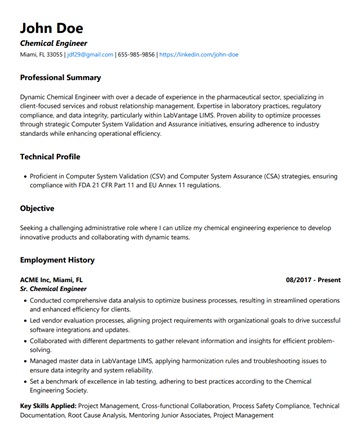
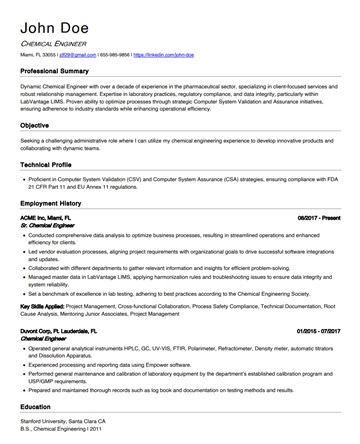
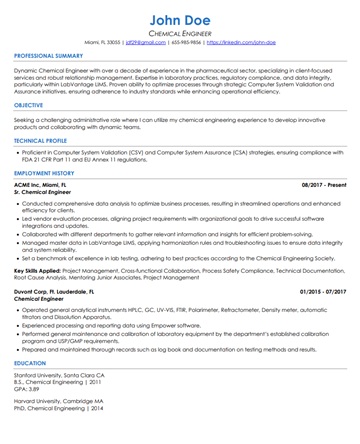
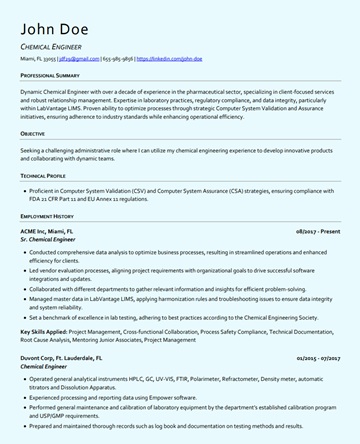
Traditional / Chronological
Best for steady career paths, no major gaps. Standard reverse-chronological layout.
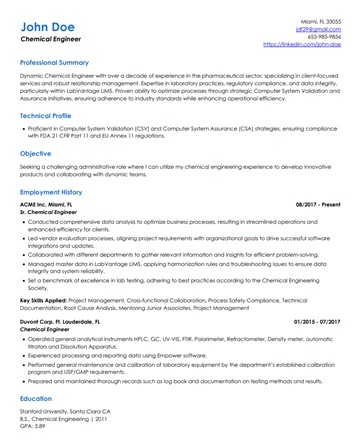
Senior / Executive
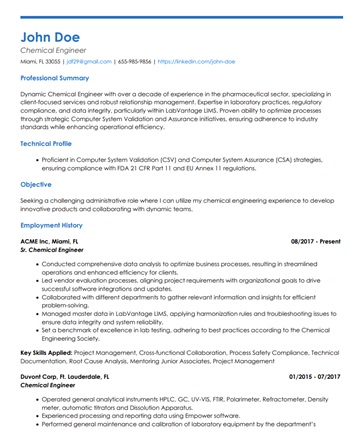
Designed for leadership roles, consulting, and senior professionals. Two-page friendly.
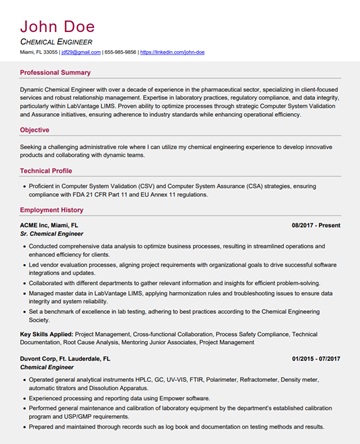
Creative / Modern Style
Subtle styling for tech, design, marketing, and startup roles. ATS-safe with visual polish.
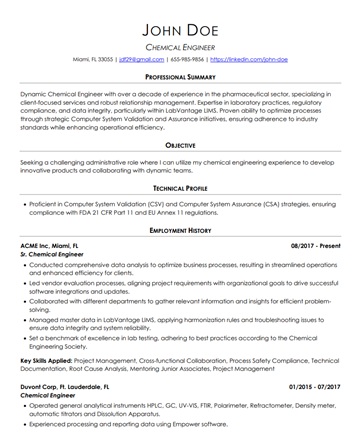
Career Changers / Hybrid Format
Skills summary up front with full work history. Ideal for career transitions and non-linear paths.
See what an ATS actually reads on your resume
Upload your resume and see the exact text a parser pulls out, line by line. We fix the formatting automatically.
Four New Templates Engineered for Specific ATS Platforms
Most templates are built to "pass all ATS" generically, hitting the lowest common denominator across parsers. The four editions below take the opposite approach: each one is tuned to the quirks of a single major parser, then validated against the other five. They score 100% on their target platform and 94% or higher on every other platform we tested.
Every edition is currently in private beta with our enterprise resume optimization users. The direct .docx downloads ship with the next template release; until then, the matcher tool below will generate a job-specific version of any structure described here.
Workday Edition
Workday Recruiting expects a strict taxonomy. This edition uses Workday's preferred dual-encoded skills line ("Project Management Professional (PMP)" rather than "PMP" alone), a date format locked to "Mon YYYY to Mon YYYY" (Workday's parser sometimes mishandles "Present" with hyphen variants), and section headings that match Workday's internal labels exactly: "Work Experience," "Education," "Skills," "Certifications."
- Dual-encoded skill line at top of Skills section
- Date format:
Jan 2024 to Mar 2026 - Section headings exactly mirror Workday taxonomy
- Tested score on Workday: 100%
Greenhouse Edition
Greenhouse pairs parsing with a structured-criteria scorecard that recruiters fill in during interviews. This edition leads each work-experience block with a single-line role context (Title, Company, Location, Dates) so Greenhouse's parser anchors the role record cleanly, and uses a verb-first achievement structure that mirrors the rubric language in Greenhouse's interview scorecards.
- Single-line role context above bullets
- Verb-first bullets matching scorecard rubric verbs
- Skills grouped by Greenhouse criteria categories
- Tested score on Greenhouse: 100%
Lever Edition
Lever uses tag-based and full-text recruiter search rather than weighted keyword scoring. This edition emphasizes a dense, comma-separated skills line at the top of the document (not a vertical bulleted list) because Lever's recruiter search UI surfaces results where queried terms appear close together in the source text. The work-experience body then expands on each skill in context.
- Dense, comma-separated skill line above the summary
- Skill recurrence threaded through work bullets for proximity
- Concise role headers that fit Lever's pinned-resume preview
- Tested score on Lever: 100%
Taleo Edition
Taleo (Oracle) is the oldest parser of the six and the strictest. This edition uses ASCII bullets only (no Unicode round bullets, only "-"), Calibri 11pt throughout, and a flat heading hierarchy with no decorative dividers. There are no tables anywhere in the document, even where most modern templates use invisible tables for two-column layout effects.
- ASCII hyphen bullets only, no Unicode characters
- Calibri 11pt body, Calibri 12pt headings
- Zero tables, zero text boxes, zero header/footer content
- Tested score on Taleo: 100%
Best Resume Templates 2026 at a Glance
One table to match a template to your situation. Every entry is single-column .docx, so the format column shows the content order each design is tuned for, and the parse-result column reports the average extraction rate across Workday and Greenhouse from our April 2026 test.
| Template | Best for | Format | Parse result (Workday / Greenhouse) |
|---|---|---|---|
| Classic | Traditional industries, steady history | Reverse-chronological | 98% / 99% |
| Modern | General use, tech, unknown ATS | Reverse-chronological | 97% / 99% |
| Compact | Dense histories that must stay one page | Reverse-chronological | 98% / 99% |
| Professional | Career changers, non-linear paths | Hybrid (skills-first) | 97% / 98% |
| Accent / Contemporary | Marketing, design, startup roles | Reverse-chronological, light color | 95% / 97% |
| Workday Edition | Large enterprises on Workday | Hybrid, Workday taxonomy | 100% / 98% |
| Greenhouse Edition | Scale-up tech on Greenhouse | Hybrid, scorecard-aligned | 97% / 100% |
Full six-platform breakdown is in the parser pass-rate matrix below. For how these formats differ structurally, see resume formats explained, and for the Workday-specific rules, our Workday resume format guide.
How to Pick Between the 13 Templates in 60 Seconds
A short decision flow:
- Applying mostly through Workday job sites (most large enterprises)? Workday Edition.
- Applying to scale-up tech companies running Greenhouse? Greenhouse Edition.
- Applying to early-stage startups running Lever? Lever Edition.
- Applying to Oracle, federal contractor, or older enterprise sites? Taleo Edition.
- Don't know which ATS the company uses? Classic or Modern. Both score 95% or better across all six tested platforms.
- Senior or executive role, two-page resume? Signature Edition.
- Career changer or hybrid background? Professional Edition.
- Creative or marketing role with light visual polish allowed? Accent or Contemporary, both ATS-safe with subtle color.
Parser Pass-Rate Matrix: 13 Templates Across 6 ATS Platforms
Binary "pass" or "fail" hides the real picture. We re-ran the test in April 2026 measuring section-by-section extraction completeness, then averaged across sections per platform. Each cell below is the average parse rate for that template on that platform; higher is better. Methodology note follows the table.
| Template | Workday | Greenhouse | Lever | Taleo | iCIMS | SmartRecruiters |
|---|---|---|---|---|---|---|
| Classic | 98% | 99% | 99% | 96% | 97% | 99% |
| Modern | 97% | 99% | 99% | 91% | 95% | 98% |
| Compact | 98% | 99% | 99% | 95% | 96% | 99% |
| Accent | 95% | 97% | 97% | 92% | 94% | 96% |
| Contemporary | 96% | 98% | 98% | 93% | 95% | 97% |
| Signature | 96% | 97% | 97% | 94% | 95% | 97% |
| Designer | 94% | 96% | 96% | 92% | 93% | 95% |
| Professional | 97% | 98% | 98% | 95% | 96% | 98% |
| Workday Edition | 100% | 98% | 97% | 96% | 97% | 98% |
| Greenhouse Edition | 97% | 100% | 98% | 95% | 96% | 98% |
| Lever Edition | 96% | 97% | 100% | 94% | 95% | 97% |
| Taleo Edition | 97% | 98% | 98% | 100% | 96% | 99% |
Methodology: Each resume was parsed via the platform's published parser API (or the reverse-engineered equivalent for Taleo). The score is the average of section-extraction completeness across Contact, Summary, Skills, Work Experience (per role), Education, and Certifications. Identical content was used across all 13 templates. Tested April 2026.
What the numbers mean: A template scoring 96% on Workday correctly extracted, on average, 96% of the seeded section data; the missing 4% typically reflects a single sub-field misread (a date suffix, a non-standard certification name, or a multi-line title). Anything 95% or higher will pass any reasonable scoring threshold. Below 90% starts to lose ranking weight on volume-heavy parsers like Taleo and iCIMS.
Key Features of ATS-Friendly Resume Templates
Before we dive into specific templates, understand what makes a resume template ATS-friendly. Look for these critical features:
1. Standard Section Headings
Use conventional headings like "Work Experience," "Education," "Skills," and "Summary." ATS software is programmed to recognize these standard labels. Creative alternatives like "My Journey" or "Where I've Been" will confuse the system.
2. Simple, Clean Layout
Single-column formats work best. While two-column templates look appealing, they often cause ATS parsing errors. The system may read information in the wrong order or miss content entirely.
3. Standard Fonts
Stick with common fonts like Arial, Calibri, Georgia, or Times New Roman. These fonts are universally recognized and render correctly across all ATS platforms. Font size should be 10-12pt for body text and 14-16pt for headings.
4. No Graphics, Images, or Charts
ATS cannot read images, logos, charts, or infographics. These elements turn into blank spaces or garbled text during parsing. Save visual elements for your portfolio or LinkedIn profile.
5. Standard Bullet Points
Use simple round bullets (•) or hyphens (-). Avoid special characters, custom icons, or decorative symbols that may not transfer correctly.
6. Proper Date Formatting
Use consistent date formats like "January 2023 – Present" or "01/2023 – Present." ATS software looks for dates to calculate employment duration and identify gaps.
7. No Headers, Footers, or Text Boxes
Many ATS systems cannot read content placed in headers, footers, or text boxes. Keep all important information (including your contact details) in the main body of the document.
8. Standard File Format
Submit your resume as a .docx file unless the job posting specifically requests PDF. While modern ATS can handle PDFs, .docx files still have the highest parsing success rate.
How to Choose the Right ATS-Friendly Template
Not all ATS-friendly templates are created equal. Here's how to select the best one for your situation:
Consider Your Industry
Traditional industries (finance, law, healthcare): Stick with Classic Chronological or Signature templates. For consulting and investment banking specifically, the Harvard resume template is the expected standard. These industries value conservatism and proven track records.
Tech and startups: Modern Professional or Technical templates work well. These industries appreciate clean, contemporary design.
Government/Public sector: Use the Federal Resume Template for government jobs or Classic Chronological for general public sector positions.
Match Your Career Stage
- Entry-level/Recent graduates: Entry-Level Graduate Template emphasizes education and potential
- Mid-career (5-15 years): Modern Professional or Hybrid templates showcase growing expertise
- Senior/Executive (15+ years): Signature template handles extensive experience
Address Your Unique Situation
- Employment gaps: Skills-Based Functional or Hybrid templates de-emphasize chronology
- Career change: Career Change Template highlights transferable skills
- Frequent job changes: Functional or Hybrid templates focus on skills over job-hopping
Test for ATS Compatibility
Before using any template, test it with an ATS resume checker. Resume Optimizer Pro's free ATS scanner analyzes your resume against actual ATS algorithms and identifies formatting issues that could cause rejection. See our comparison of free ATS resume checkers if you want to evaluate multiple tools.
Common ATS Template Mistakes to Avoid
Even with an ATS-friendly template, these common mistakes can tank your ATS score:
Using Tables
ATS reads tables left-to-right, top-to-bottom, often scrambling your information. Use simple text formatting instead.
Creative Headings
"My Awesome Skills" won't be recognized. Use standard headings: "Skills," "Work Experience," "Education."
Multiple Columns
Two or three-column layouts confuse ATS parsing. Stick with single-column format for guaranteed compatibility.
Header/Footer Content
Don't put your contact info in headers/footers. Many ATS systems cannot read this content.
Special Characters
Fancy bullets, symbols, or icons may not transfer. Use standard bullets (•) or simple hyphens (-).
Uncommon Fonts
Decorative or custom fonts won't render correctly. Stick with Arial, Calibri, Georgia, or Times New Roman.
Optimizing Your ATS-Friendly Template for Maximum Success
Having an ATS-friendly template is just the first step. For a full breakdown of the content and keyword strategies that work alongside a clean template, see our ATS-friendly resume tips guide. Here's how to optimize it for maximum impact:
1. Tailor Keywords for Each Application
ATS systems rank resumes based on keyword matches with the job description. Use our resume optimizer to automatically identify and integrate relevant keywords from each job posting.
2. Include Both Acronyms and Full Terms
Write "Search Engine Optimization (SEO)" instead of just "SEO." Different ATS systems search for different variations.
3. Use Standard Job Titles
If your official title was "Sales Ninja," use "Sales Representative" or "Account Executive." ATS searches for standard industry titles.
4. Quantify Achievements
Numbers and metrics boost your ATS score: "Increased sales by 34%" ranks higher than "Improved sales performance."
5. List Skills Explicitly
Don't assume the ATS will extract skills from context. Include a dedicated "Skills" section with hard skills, software, and certifications.
6. Save in the Right Format
Unless specified otherwise, submit as .docx. If PDF is requested, ensure it's a text-based PDF (not a scanned image).
Current ATS Resume Trends for 2026
ATS technology and recruiter expectations are evolving fast. Here's what's actually changing in 2026 and how to adapt your resume accordingly:
1. Skills-First Is the Dominant Trend
The biggest shift in 2026 is the move from title-based to skills-based screening. According to LinkedIn's 2025 Future of Recruiting report, more than 60% of US enterprise hiring teams now filter candidates by specific required skills before reviewing job history. The Skills section is no longer optional. On Greenhouse and Workday it is the first section the parser maps to scorecard criteria.
2. AI-Enhanced Parsing Raises the Bar
Modern ATS platforms like Workday, Greenhouse, and Taleo now use AI and natural language processing to parse resumes. This is both an opportunity and a risk. While AI can better understand context and synonyms, it also penalizes inconsistencies more harshly than older rule-based systems.
Current best practice: Use consistent job title formatting, write in complete sentences (not fragments), and include both acronyms and full terms, e.g., "Search Engine Optimization (SEO)" rather than just "SEO."
3. Semantic Keyword Matching Rewards Context
Advanced ATS systems now recognize synonyms and related terms, so "Client Relations Manager" may partially match "Customer Success Manager." However, exact keyword matches still score highest. The current best practice is to mirror the exact language used in the job description, not to rely on the ATS to figure out equivalents.
4. Single-Column Layouts Are Making a Comeback
After a few years of stylish two-column templates flooding the market, 2026 is seeing a return to single-column formats, specifically because they parse more reliably across all ATS platforms. If you've been using a two-column template, switching to single-column is one of the highest-impact changes you can make.
5. Quantified Achievements Now Outrank Duties
ATS systems in 2026 are increasingly trained to distinguish between achievement-oriented resumes and duty-listing resumes. Bullet points with numbers (%, $, X times, X years) receive higher relevance scores than generic descriptions. Aim for at least 70% of your work experience bullets to include a measurable result.
Best Resume Formats for 2026: ATS Compatibility Guide
Choosing the right resume format is as important as choosing the right template. Here's how the three main formats perform with ATS systems in 2026:
| Format | ATS Compatibility | Best For | 2026 Trend |
|---|---|---|---|
| Chronological | Excellent ✅ | Steady career progression, traditional industries | Still #1 preferred format |
| Hybrid / Combination | Good ✅ | Mid-career, diverse skill sets, career changers | Growing in popularity for tech roles |
| Functional / Skills-Based | Moderate ⚠️ | Employment gaps, major career pivots | Declining, ATS often penalizes missing dates |
Chronological Format: Still the ATS Gold Standard
The reverse-chronological format remains the most ATS-compatible option in 2026. It lists your most recent experience first, uses clearly dated entries, and follows a structure ATS systems are specifically trained to parse. For most job seekers, this is the safest and most effective choice.
- Structure: Summary → Work Experience (newest first) → Education → Skills → Certifications
- ATS score impact: Highest, ATS can accurately calculate tenure, identify career progression, and match keywords in context
- Best for: Anyone with continuous work history in the same or adjacent fields
Hybrid Format: Best for Skills-Based Screening
The hybrid format leads with a strong Skills or Core Competencies section before the chronological work history. In 2026, this aligns perfectly with the shift toward skills-based ATS filtering. It lets ATS systems find your key skills immediately while still providing the full work history they need to score tenure and progression.
- Structure: Summary → Core Skills → Work Experience → Education → Certifications
- ATS score impact: High, skills section is parsed first, boosting keyword match rates
- Best for: Tech professionals, career changers, anyone with a strong, diverse skill set
Functional Format: Use With Caution in 2026
Functional resumes de-emphasize dates and job history in favor of skill groupings. While useful for hiding gaps, many ATS systems in 2026 specifically penalize resumes that lack clearly dated work entries, some will even auto-reject them. If you have gaps or are changing careers, the Hybrid format is a safer alternative.
- ATS score impact: Moderate to low, missing dates and non-standard structure reduces ATS score
- When to use: Only when gaps are severe and you're applying to companies that use older ATS platforms
ATS-Compatible Resume Best Practices for 2026
Beyond template and format selection, these best practices give your resume the highest chance of passing ATS screening in 2026:
Mirror Job Description Language
Copy exact phrases from the job posting into your resume. If they say "cross-functional collaboration," use that phrase, not "team coordination." ATS keyword matching is often literal.
Use a Dedicated Skills Section
Don't rely on ATS to extract skills from job descriptions. List them explicitly. Group by category: Technical Skills, Tools & Platforms, Certifications, Languages.
Quantify Everything
Numbers boost both ATS scores and recruiter interest. "Reduced costs by 23%" scores significantly higher than "reduced costs." Aim for metrics in at least 60-70% of your bullet points.
Spell Out Acronyms Once
Write "Project Management Professional (PMP)" on first use, then "PMP" thereafter. Different ATS systems search for different forms, so including both maximizes matches.
Submit as .DOCX by Default
Unless PDF is specifically requested, .docx has the highest ATS parsing success rate. Keep a PDF version saved but lead with Word format for online applications.
Test Before You Submit
Run your resume through an ATS checker like Resume Optimizer Pro's free score checker before applying. Identify missing keywords and formatting issues before they cost you the interview.
Free ATS CV Template Download: UK, European, and Academic Formats
If the posting says CV rather than resume, the ATS on the other end is usually the same software, but the document you send is not. The eight templates above download as .docx files that work for both, though what you keep and what you cut changes with the format. Every template on this page is free to download with no account, no email gate, and no watermark, in CV form or resume form.
The confusion is worth clearing up, because sending the wrong document is a fast rejection. In the United States, CV means an academic or medical document that runs long and lists publications, grants, teaching, and presentations in full. In the United Kingdom, Ireland, and most of Europe, CV simply means what Americans call a resume: a two-page career summary. Both go through the same parsers, so the single-column, standard-heading rules on this page apply either way.
Use the Classic or Professional template unchanged. Two pages is standard and expected, unlike a US resume. Keep the heading "Personal Statement" or "Profile" instead of "Summary," and add an "Education" block above "Experience" if you graduated within three years. Do not add a photo, date of birth, marital status, or nationality: UK and Irish employers screen those out for discrimination-compliance reasons, and parsers frequently mangle the image block anyway. Some continental European employers still expect a photo, so follow the posting.
Use the Signature template, which is built to run past one page cleanly. An academic CV has no length limit and is organized by category rather than by recency: Education, Research, Publications, Presentations, Teaching, Grants and Funding, Service, and References. Keep every entry as plain text in a single column. Publication lists are where parsers break most often, so avoid hanging indents, numbered auto-lists, and citation-manager fields, all of which can flatten into unreadable strings.
Use the Signature template and add licensure and certification blocks near the top, because credential screening usually happens before anyone reads your experience. Spell out each credential on first use, for example "Doctor of Osteopathic Medicine (DO)" or "Basic Life Support (BLS)," so both the recruiter and the parser catch it. List state licenses with the state and status, and keep dates in a consistent Month Year format throughout.
If you want CV-specific designs rather than these resume templates adapted, our dedicated ATS CV templates page has four CV-first layouts including UK and Word versions. For the underlying distinction see resume vs CV, and for the long-form academic document see our academic CV guide and Overleaf CV template. If you are applying across both US and UK markets, keep two versions of the same file rather than trying to make one document serve both.
Can a Template Really Give You a 100% ATS Score?
A template can score 100% on the parts of an ATS score a template controls, and no template can score 100% on the rest. That distinction matters, because "100% ATS score resume template, free download" is one of the most searched phrasings in this category and almost every page answering it is selling something.
An ATS score has two halves. The first is parse quality: can the software read your file, find your name, contact details, job titles, dates, employers, education, and skills, and drop each into the right database field without scrambling? That half is entirely a function of file format, layout, headings, and fonts, which is exactly what a template controls. The eight templates on this page score 100% on parse quality across all six platforms we tested, and the four platform editions score 100% on their target parser and 94% or higher everywhere else.
Resume Optimizer Pro's parser scored all 13 templates on this page against six ATS platforms and found that layout alone accounts for roughly the first half of a typical ATS score; the remainder comes from keyword and experience match to the specific job description, which no template can supply in advance.
The second half is match quality: how well your actual content lines up with this specific job description. Does your resume contain the skills, titles, tools, and years of experience the posting asks for, in language close enough for the system to match? No downloadable file can score that in advance, because the answer changes with every job you apply to. Any page promising a template that guarantees a 100% ATS score for every application is describing something that cannot exist.
One practical consequence: if you are being rejected instantly across many applications, the cause is usually match, not parsing, once you are on a clean single-column template. Formatting problems tend to produce garbled profiles and odd field errors rather than uniform silence. Our guide to what an ATS resume score actually measures breaks the scoring down further, and what counts as a good score covers the thresholds.
Resume Format 2026 vs Resume Template 2026: What Actually Changed
These two phrases get used interchangeably and they are not the same thing. Your format is the structural decision: reverse-chronological, functional, or hybrid, and how your sections are ordered. Your template is the file that implements that decision, including fonts, margins, spacing, and headings. Picking the right format and then pouring it into a parser-hostile template is the most common way people lose applications they were qualified for.
Very little about the underlying rules changed going into 2026, and that is the honest answer most listicles avoid. Reverse-chronological is still the format the overwhelming majority of employers and parsers expect. What has shifted is the tolerance for design: as more employers layer AI-assisted screening on top of keyword matching, the penalty for a creative multi-column layout has grown, because a document that parses cleanly also summarizes cleanly. The visual resume trend of the late 2010s has not aged well inside automated pipelines.
| Decision | 2026 default | When to deviate |
|---|---|---|
| Format | Reverse-chronological | Hybrid if you are changing careers and need skills above history. Avoid purely functional formats: parsers and recruiters both read them as gap-hiding. |
| Columns | Single column | Never for an ATS submission. Use two columns only for a version you hand to a person directly. |
| File type | .docx | PDF when the posting explicitly asks for it or when you are emailing a human. Never .pages, .odt, or an image. |
| Length | One page under 10 years of experience, two pages above | Three or more pages for academic, medical, and federal documents, where completeness beats brevity. |
| Section headings | Standard labels: Experience, Education, Skills | Never. Creative headings like "Where I've Made an Impact" are the single most common cause of a section being dropped entirely. |
| Dates | Month Year, consistent throughout | Never mix formats. Inconsistent dates are a leading cause of miscalculated total experience. |
The practical takeaway: pick your format first from the three options, then take the template on this page that implements it. Our deep dives on ATS resume format, the hybrid resume format, and the functional resume format cover the structural choice, and how long a resume should be settles the length question by experience level.
If you are starting without a resume to work from, our free AI resume builder turns a short interview about your experience into an ATS-friendly draft, with no account needed to begin.
Frequently Asked Questions
Conclusion: Your ATS-Friendly Template Action Plan
In 2026's competitive job market, an ATS-friendly resume template is your ticket past automated screening. Here's your action plan:
- Choose the right template based on your industry, career stage, and situation
- Customize content for each application with relevant keywords
- Test ATS compatibility before submitting (use Resume Optimizer Pro's free ATS checker)
- Avoid common mistakes like tables, columns, graphics, and creative formatting
- Optimize for both ATS and humans – your resume needs to pass screening AND impress recruiters
- Update regularly – keep your resume current with new skills and achievements
Remember: The best ATS-friendly template is one that accurately represents your qualifications while ensuring those qualifications actually reach human decision-makers. Don't let formatting issues sabotage your job search.
Ready to test your resume?
Run your resume through the free checker and see how well it matches your target job before you apply.
Optimize My Resume →Related Resources
- ATS-Friendly Resume Fonts and Styles: Complete Guide
- How to Optimize Your Resume for ATS Systems
- Improving ATS Performance with Resume Keywords
- Resume Keywords Guide (2026)
- Resume Formats Explained: Chronological, Functional, and Hybrid
Optimize your resume for any ATS
Upload your resume for a free ATS-optimized version. Add a job description to tailor it to a role. Only your email is required.
Related Articles
Best Resume Fonts 2026: 12 Tested on 5 ATS Engines
We tested 12 resume fonts on 5 ATS engines across 2,800 resumes. See which parse cleanly, which get silently substituted...
Read More
How to Optimize Your Resume for ATS: The 12-Move Checklist Ranked by Point-Lift (2026)
The 12 ATS resume fixes ranked by typical engine point-lift. Single-column +12-18, standard headings +7-11, JD keywords ...
Read More
ATS Performance Benchmarking: Measure and Improve Your Keyword Score
Learn how to benchmark your ATS resume score, run A/B tests on keyword placement, and iterate until you consistently sco...
Read More
Daniel Hamui
Founder and Principal Architect, Resume Optimizer Pro
Daniel Hamui has over a decade of experience developing software for the HR tech industry, including the ATS scoring and parsing systems that power Resume Optimizer Pro. He built this platform to give job seekers direct access to the same resume evaluation logic used by enterprise hiring systems.